
(925) 361-5053

[email protected]

Dublin, CA 94568

Shooting Starts Preschool | Dublin, CA - Excellence in Education
  • Home
  • Philosophy & Curriculum
  • Activities
  • Reviews
  • Contact us
  • Blog

OUR BLOGS

Building A Strong Parent-Teacher Relationship In Preschool

11/19/2023

 
Parent Teacher Relationship
The preschool years are a crucial time in a child's education, laying the foundation for their academic and social development. As parents, teachers, and caregivers, we play a pivotal role in shaping a child's school experience. One key factor that significantly influences a learning journey is the strength of the parent-teacher relationship. Research shows that a positive partnership between parents and preschool teachers greatly increases a student's chances of academic success and overall well-being.
As the school year begins, both parents and teachers embark on a shared mission—to provide kids with the best possible start to their education. Tutors and parents must strive for effective communication throughout the school year. Preschool lays the groundwork for a child's future success, not only academically but also in developing lifelong skills. Interpersonal skills, emotional intelligence, and a positive attitude toward learning are all cultivated during these early years.
The Preschool in Dublin creates a positive and collaborative environment that fosters a strong parent-teacher relationship that contributes to the overall success and well-being of the children.

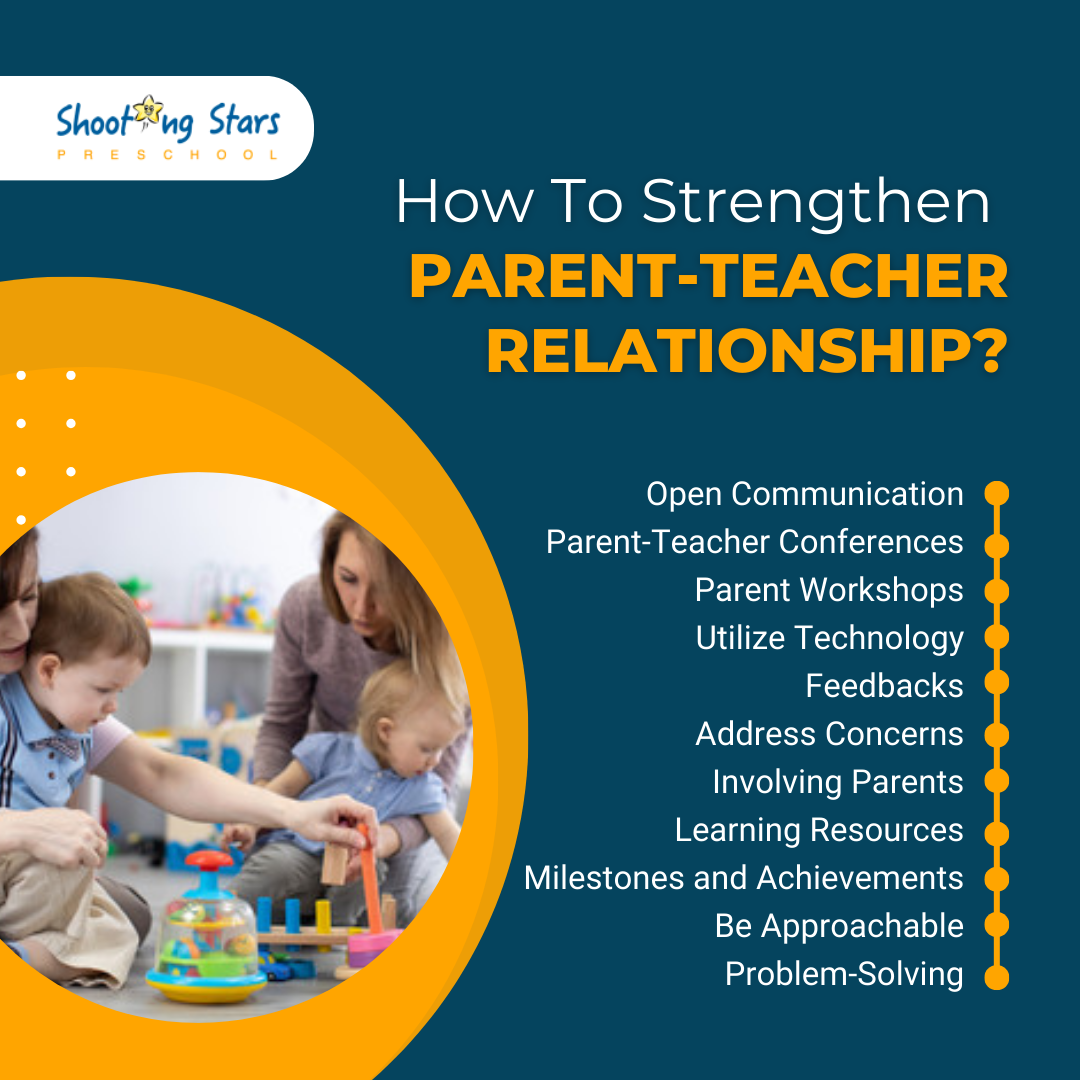
How To Strengthen Parent-Teacher Relationship?


​Strengthening the parent-teacher relationship is essential for the overall development and success of a child. Here are some effective ways to enhance and nurture this crucial partnership:
​
  • Open Communication
    • Establish open lines of communication from the beginning of the school year.
    • Share relevant information about the child's progress, achievements, and areas for improvement promptly.
  • Parent-Teacher Conferences
    • Schedule regular conferences to discuss the child's academic performance, interpersonal skills, and overall development.
    • Create a welcoming environment that encourages collaboration and open dialogue.
  • Parent Workshops
    • Organize workshops or informational sessions to educate parents about the curriculum, teaching methods, and how to support their ward's learning at home.
    • Provide resources and tips for effective parent engagement.
  • Utilize Technology
    • Use technology platforms, such as emails, messaging apps, or online portals, to keep parents informed about classroom activities and upcoming events.
    • Share pictures, videos, or examples of the child's work to maintain a visual connection.
  • Feedbacks
    • Regularly provide positive feedback about the child's strengths and accomplishments.
    • Encourage parents to celebrate their child's achievements at home, fostering a positive outlook toward learning.
  • Address Concerns
    • If issues arise, address them promptly and constructively.
    • Collaborate with parents to develop strategies for improvement, emphasizing a shared commitment to the child's success.
  • Involving Parents
    • Seek input from parents on relevant decisions, such as classroom activities, projects, or events.
    • Make parents feel valued and part of the educational process.
  • Learning Resources
    • Recommend educational resources, books, or activities that parents must use at home to support their kid's learning.
    • Foster a sense of continuity between the school and home environments.
  • Milestones and Achievements
    • Acknowledge and celebrate both academic and personal milestones.
    • Create a supportive atmosphere that recognizes the child's growth and development.
  • Encourage Parental Involvement
    • Invite more parents to participate in school events, volunteer opportunities, or classroom activities.
    • Engage parents in decision-making processes that affect the school community.
  • Be Approachable
    • Create a welcoming atmosphere where parents feel comfortable approaching teachers with concerns or questions.
    • Demonstrate empathy and understanding, recognizing the unique needs of each child.
  • Problem-Solving
    • Approach challenges collaboratively, involving both parents and tutors in handling problems.
    • Work together to identify solutions that benefit the child's overall well-being and development.
Significance Of Parent Teacher Relationship

Significance Of Teacher-Child Relationship


A child's teacher plays a pivotal role in children's education, as research shows that when children's teachers effectively communicate with parents, address opportunity gaps, and work in strong partnerships, they greatly increase the chances of student academic achievement, improved behavior, and ensuring that schools and home are both on the same page in strengthening parents' capacity to support their child's education, even on a busy day. Research conducted by co-principal investigators reveals that fostering effective school-home communication, where teachers actively reach out and provide extra support, has been identified as a key factor in greatly improving various aspects of student work to develop lifelong skills.
The teacher-child relationship in kindergarten is critically important for several reasons, as it forms the foundation for a child's overall development and early educational experiences. Here are key reasons highlighting the significance of a strong teacher-child relationship in preschool:
  • Emotional Development
    • Preschoolers are at a stage where they are developing crucial emotional and interpersonal skills. A positive bond with a teacher provides a secure and nurturing environment, fostering emotional well-being and helping the children learn to manage their emotions in their school day activities.
  • Trust and Security
    • A strong teacher-child relationship builds trust and a sense of security for the child. The presence of a dependable teacher offering support and guidance fosters a secure and reassuring learning atmosphere.
  • Social Skills Development
    • Interactions with tutors provide valuable opportunities for children to develop essential skills. Teachers model positive behaviors, teach conflict resolution, and encourage effective communication, laying the groundwork for healthy social interactions.
  • Academic Engagement
    • A positive engagement with a teacher enhances a child's engagement with learning. When children feel a connection to their teacher, they are more motivated to participate in classroom activities and are more likely to develop a positive attitude toward learning.
  • Language Development
    • Interactions with tutors contribute significantly to language development. Through conversations, storytelling, and other verbal exchanges, children enhance their vocabulary, communication skills, and the ability to express themselves effectively.
  • Cognitive Development
    • Tutors play a pivotal role in stimulating cognitive development by providing age-appropriate activities, encouraging curiosity, and fostering a love for learning. Positive teacher-student interactions contribute to the child's cognitive growth and readiness for future academic challenges.
  • Individualized Support
    • Teachers who establish strong relationships with their students are better equipped to understand each child's unique strengths, challenges, and learning styles, enabling them to customize their teaching methods to meet individual needs.
  • Behavioral Guidance
    • A positive teacher-child relationship supports behavioral development. Teachers should guide children in understanding appropriate behaviors, setting boundaries, and learning self-control. This guidance contributes to a positive and cooperative classroom environment.
  • Sense of Belonging
    • Preschoolers benefit from a sense of belonging within their classroom community. A strong teacher-child relationship fosters a feeling of inclusion and acceptance, which is essential for building a child's confidence and self-esteem.
  • Transition to School
    • For many children, nursery serves as their first experience in a structured learning environment. A positive relationship with a teacher eases the transition to formal education, creating a positive association with the school setting.
  • Family-School Connection
    • The teacher-child relationship serves as a bridge between the home and school. When teachers establish open communication with parents, they create a collaborative partnership that supports the child's holistic development.

​In essence, the teacher-child relationship in preschool is a cornerstone of early childhood education. It goes beyond imparting academic knowledge; it shapes a child's emotional intelligence and attitude toward learning. Establishing a positive and nurturing learning atmosphere sets teachers lay the groundwork for a child's future success in both school and life.

Conclusion


Building a strong parent-teacher relationship is not just a nicety—it is a necessity for the holistic development of the child. The collaboration between parents and teachers sets the stage for a positive and enriching school experience, helping children develop the skills they need for a lifetime of learning. As we navigate the busy days of the school year, let us remember the profound impact that effective communication, positive relationships, and a shared commitment to a child's education have on their present and future success. Parents and teachers should collaboratively create a supportive and nurturing environment that propels every child toward academic excellence and the development of personal skills.


Comments are closed.
Powered by Create your own unique website with customizable templates.
  • Home
  • Philosophy & Curriculum
  • Activities
  • Reviews
  • Contact us
  • Blog
